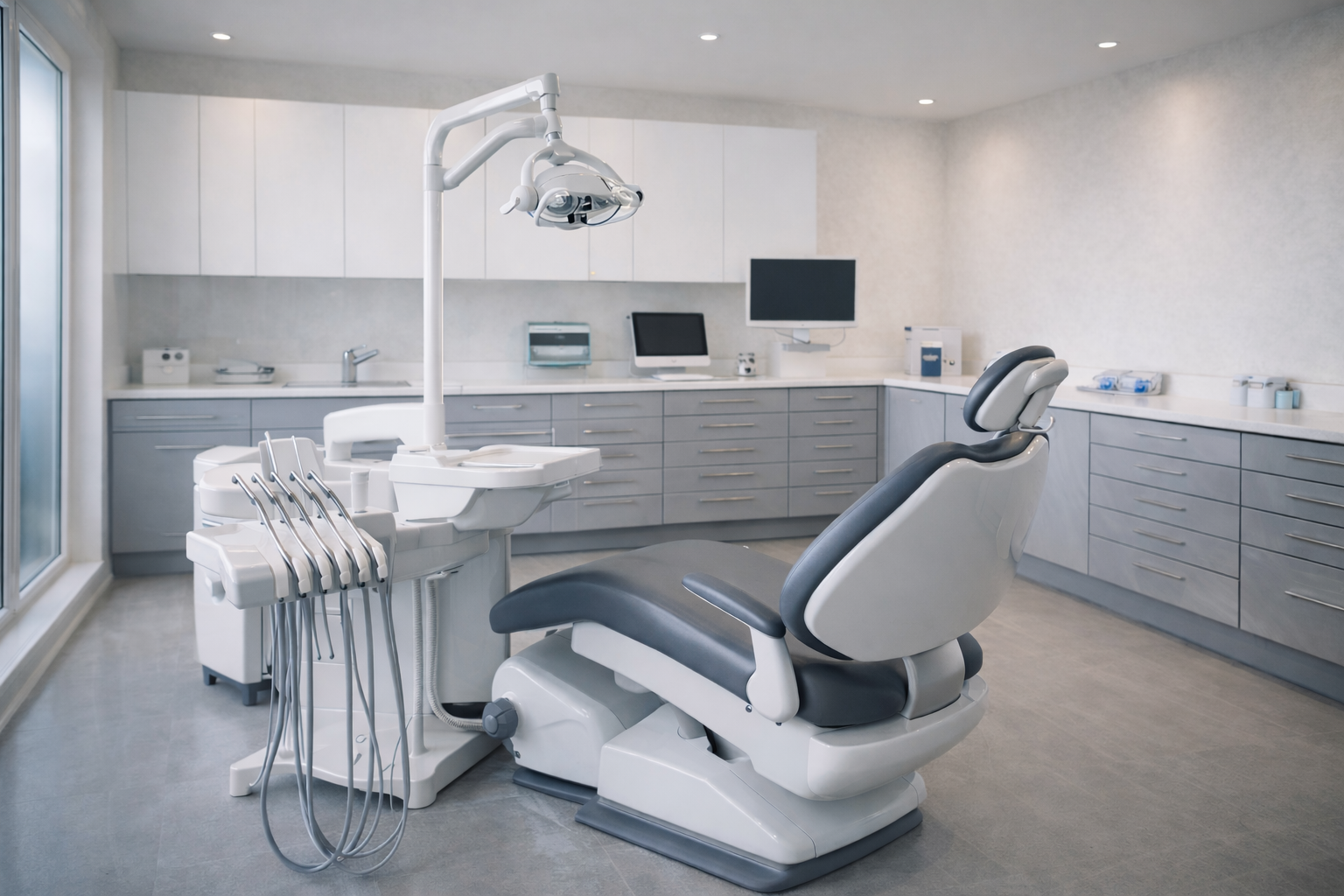
The future of dental nursing in the UK is not something that will arrive suddenly or announce itself clearly. It is already taking shape through workforce pressure, regulatory demand, and the gradual expansion of responsibility inside dental practices. What is changing is not only what dental nurses do, but how their contribution is understood and relied upon.
This shift is not being driven by ambition alone. It is being driven by necessity.
A Profession Under Quiet Pressure
Dental nursing has always been a role defined by reliability. Yet in recent years, that reliability has been tested by sustained workforce shortages, rising patient complexity, and increasing expectations around compliance and governance.
Retention has become one of the most pressing challenges facing UK dentistry. Practices are struggling to maintain stable teams, while experienced dental nurses are reassessing long-term viability in a role that has historically offered limited progression and recognition.
At the same time, the demands placed on dental nurses have increased. Regulatory oversight has intensified, patient expectations have evolved, and practices are operating under tighter financial and operational constraints. These pressures have not reduced responsibility. They have redistributed it.
The future of dental nursing in the UK must be understood in this context. It is being shaped by systems under strain, not by abstract career models.
How the Dental Nurse Role Is Already Changing
In many practices, the formal job description no longer reflects the reality of the role. Dental nurses are increasingly relied upon to stabilise systems, maintain standards, and absorb pressure that would otherwise disrupt clinical flow.
This shift mirrors a broader redefinition of the profession, where the modern dental nurse role has expanded beyond chairside assisting and into areas of continuity, coordination, and professional oversight. These responsibilities are rarely assigned formally, yet they are essential to keeping practices functional.
Dental nurses are now more likely to:
- Maintain continuity across rotating clinicians
- Identify early signs of risk or drift in practice systems
- Support patient management beyond chairside tasks
- Act as anchors during periods of disruption
These responsibilities are not optional. They are essential to keeping practices operational, even when they remain poorly articulated.g it.
Workforce Sustainability and the Cost of Inaction
The dental nursing workforce is under pressure not because of a lack of commitment, but because of misalignment between responsibility and reward.
When experienced nurses leave the profession, practices do not lose tasks. They lose institutional knowledge, situational awareness, and system stability. These losses are difficult to quantify, but their impact is felt immediately.
Sustainability depends on more than recruitment. It depends on whether experienced professionals can see a future that values their contribution beyond endurance.
If the profession continues to rely on goodwill alone, attrition will accelerate. The future of dental nursing in the UK cannot be secured without addressing this imbalance.
Skills That Will Define the Next Phase of Dental Nursing
The skills most valued in the future will not be limited to technical competence. Clinical ability will remain essential, but it will no longer be sufficient as a marker of professional value.
As explored in the distinction between clinical skill and professional skill in dental nursing, future capability will be defined by judgement, situational awareness, and the ability to function effectively when conditions are uncertain. These skills allow dental nurses to support decision making, protect patient safety, and stabilise systems under pressure.
The next phase of dental nursing will increasingly prioritise:
- Professional judgement in uncertain situations
- Situational awareness beyond immediate tasks
- Communication that supports calm decision making
- Understanding of how systems interact and fail
This shift places clinical competence within a broader professional framework rather than replacing it..
Career Progression and the Reality of Opportunity
Career progression in dental nursing has long been discussed in abstract terms. In practice, opportunities remain uneven and highly dependent on local context.
Traditional pathways have included senior nursing roles, education, compliance-focused positions, and treatment coordination. These routes exist, but they are not universally accessible or consistently supported.
What is changing is how progression is being defined. Increasingly, advancement is linked to capability rather than role change. Dental nurses who demonstrate reliability under pressure, awareness of risk, and understanding of governance are often entrusted with greater influence regardless of title.
This informal progression is fragile. Without clearer frameworks, it relies on individual negotiation rather than professional standards. The future of dental nursing in the UK will depend on whether progression becomes more transparent and equitable.
The Role of Regulation and Professional Standards
Regulation will continue to shape the profession, whether it is welcomed or resisted. Expectations around patient safety, documentation, and accountability are unlikely to ease.
For dental nurses, this means greater exposure to scrutiny alongside greater responsibility. The ability to understand regulatory intent, rather than simply follow procedures, will become increasingly important.
Professional maturity will be demonstrated through:
- Consistent adherence to standards
- Recognition of when systems are failing
- Willingness to escalate concerns appropriately
- Understanding how individual actions affect collective risk
These expectations position dental nurses as critical contributors to governance, not passive participants.
What Practices Must Confront
Practices play a decisive role in shaping the future of dental nursing. Relying on resilience without support is no longer viable.
Sustainable practices will need to:
- Recognise expanded responsibility explicitly
- Create development pathways that go beyond task accumulation
- Invest in retention as a strategic priority
- Value system awareness as much as efficiency
Failure to do so will not only affect staff morale. It will undermine operational stability.
The future of dental nursing in the UK is inseparable from the future of dental practice itself.
Professional Agency in an Uncertain Landscape
Despite systemic challenges, dental nurses are not without agency. The future will favour those who understand how their role fits within wider systems and who position themselves accordingly.
Future-proofing a career does not require constant upskilling or title chasing. It requires clarity about professional value.
Dental nurses who:
- Develop judgement alongside experience
- Understand governance as a system
- Communicate risk effectively
- Maintain standards under pressure
will remain relevant regardless of structural change.
This is not about individual resilience. It is about professional positioning.
Looking Ahead With Clarity
The future of dental nursing in the UK will not be defined by a single reform or initiative. It will be shaped incrementally through daily practice decisions, workforce dynamics, and the balance between responsibility and recognition.
The profession is already changing. The question is whether those changes will be acknowledged and supported, or whether they will continue to rely on unspoken expectation.
Dental nursing has never been static. Its future will belong to those who understand the systems they work within and who recognise their own professional value within them.
Discover more from Dental Nurse Hub - Resources, Training & Tools
Subscribe to get the latest posts sent to your email.