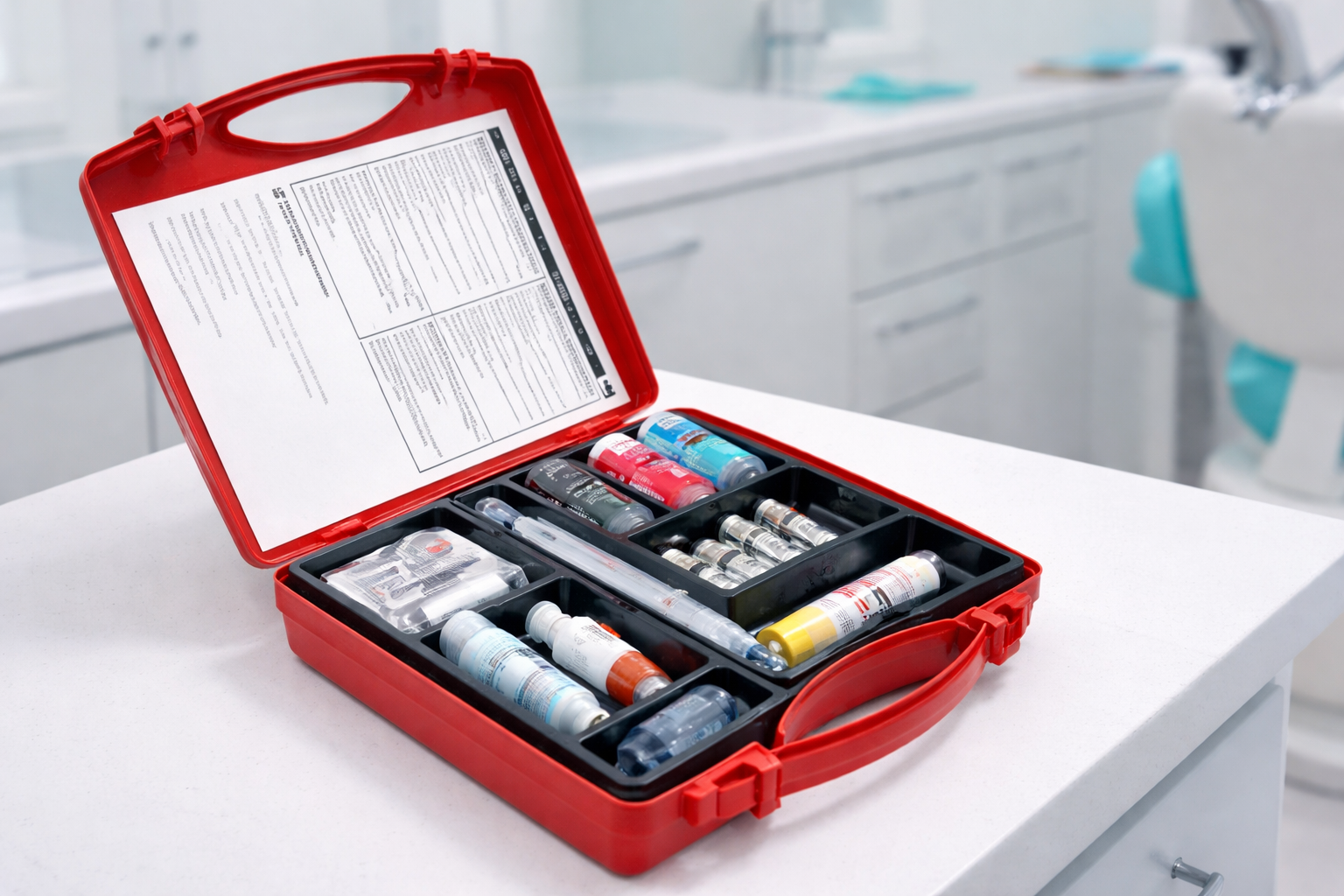
Medical emergencies in dental practice are uncommon, but when they occur, they define the quality of a team far more clearly than routine clinical work ever could. These moments are not about speed or heroics. They are about whether the environment, the people, and the systems function reliably under pressure.
Dental nurses are often at the centre of that reliability.
This is not always formally acknowledged, but it is consistently observed in real practice. The way a dental nurse prepares, anticipates, and maintains structure before an emergency occurs often determines how well the situation is managed when it does.
Why Medical Emergencies Are Rare but Defining
Medical emergencies in dental practice are uncommon, but when they occur, they define the strength of a team far more clearly than routine clinical work ever could. These moments are not about speed or heroics. They expose whether systems function reliably when pressure rises.
Emergencies are defining because they reveal how well everyday standards are maintained. Teams do not suddenly become organised during a crisis. They rely on the same systems, habits, and behaviours that operate during normal practice. This is why failures during emergencies often mirror quieter system drift that develops long beforehand.
The same principles apply across patient safety. As explored in how infection control systems quietly fail, breakdowns rarely begin at the moment of crisis. They develop gradually, becoming visible only when pressure removes the margin for error.
Medical emergencies simply make that reality unavoidable.
The Myth of “The Dentist Is in Charge”
A persistent myth in dentistry is that responsibility during a medical emergency rests solely with the dentist. In reality, emergencies are not led by job titles. They are led by preparedness.
In practice:
- The most senior person in the room may not be the most situationally aware
- The person best able to maintain structure may not be the clinical lead
- Leadership often shifts dynamically as the situation unfolds
Assuming that “someone else will take charge” introduces delay and confusion. Dental nurses, by virtue of their constant presence and familiarity with the environment, are often the professionals who recognise early signs of deterioration, initiate coordination, and maintain order when stress levels rise.
This does not undermine the dentist’s role. It reflects the reality of shared responsibility in modern dental practice.
What Responsibility Really Means in a Dental Emergency
Responsibility in a medical emergency is often misunderstood as performing specific actions. In reality, it is broader and more complex.
Responsibility includes:
- Situational awareness before anything goes wrong
- Recognition of deviation from normal patient behaviour
- Maintaining structure when others are distracted
- Supporting decision making without creating noise or panic
These responsibilities are not activated at the moment of collapse or distress. They exist long before, embedded in how the dental nurse prepares and observes daily practice.
Medical emergencies in dental practice are rarely sudden. More often, they evolve from subtle warning signs that are only noticed by professionals who are attentive and familiar with patients and routines.
The Dental Nurse’s Role Before Anything Goes Wrong
The most important contribution dental nurses make to emergency management occurs before an emergency is ever declared.
This includes:
- Familiarity with the physical environment
- Confidence in where equipment is located and how it is accessed
- Awareness of team roles and communication patterns
- Recognition of how pressure alters behaviour
Preparedness is not a checklist completed once a year. It is a living system that depends on consistency and repetition. Dental nurses are often the professionals who maintain that consistency because they are present across sessions, clinicians, and patient types.
These expectations align with established medical emergency preparedness frameworks used across dental practice, where reliability depends on how systems perform under routine conditions rather than simulated scenarios.
The NHS consistently highlights that effective emergency preparedness depends on systems that are maintained routinely, not rehearsed occasionally.
This system maintenance is rarely visible, but it is foundational.
When an Emergency Happens: Stability Over Speed
In the moment of a medical emergency, the instinct to act quickly can override the need to act clearly. Rapid movement without coordination often increases risk.
Dental nurses frequently become stabilising figures during these moments. This is not because they take control, but because they:
- Maintain structure
- Support communication
- Reduce unnecessary movement
- Anchor the team in familiar processes
Stability allows clinical decisions to be made more effectively. It also protects patients from secondary risks created by confusion or crowding.
Speed has value only when it is supported by clarity.
Training, Simulation, and the Illusion of Preparedness
Most dental teams undertake regular medical emergency training. While this training is essential, it can create an illusion of preparedness if it is not supported by daily practice.
Common gaps include:
- Training that focuses on recognition but not coordination
- Confidence that is not tested under realistic pressure
- Familiarity with protocols but not with the environment
Simulation can build knowledge, but it cannot compensate for systems that are poorly maintained. Equipment that is rarely checked, roles that are unclear, and communication patterns that are inconsistent all undermine training outcomes.
Dental nurses often recognise these gaps because they are the professionals who interact most frequently with the environment itself.
Accountability, Documentation, and Professional Protection
After a medical emergency, attention naturally focuses on clinical outcomes. However, professional accountability extends beyond the immediate event.
Clear documentation matters because it:
- Demonstrates that systems were in place
- Shows how decisions were supported
- Protects individuals from retrospective judgement
The Care Quality Commission consistently assesses how practices manage and review medical emergencies as part of its inspection framework. Documentation is not about blame. It is about demonstrating that patient safety is supported by structured systems rather than ad hoc responses.
Dental nurses who understand this context are better positioned to protect themselves professionally. Responsibility includes recognising where documentation supports learning, governance, and improvement.
Professional Maturity and Quiet Responsibility
Medical emergencies in dental practice do not test technical knowledge alone. They test professionalism, judgement, and the ability to function calmly under pressure.
Dental nurses often carry quiet responsibility in these situations. They prepare the environment, notice early changes, support coordination, and maintain structure without seeking visibility or recognition.
This work is rarely dramatic. It is rarely acknowledged. Yet it is central to patient safety.
Professional readiness is built daily, not during the crisis. It is sustained through systems, consistency, and awareness. Dental nurses who understand this reality are not simply supporting emergencies. They are defining how safely dental practice operates when it matters most.
Discover more from Dental Nurse Hub - Resources, Training & Tools
Subscribe to get the latest posts sent to your email.