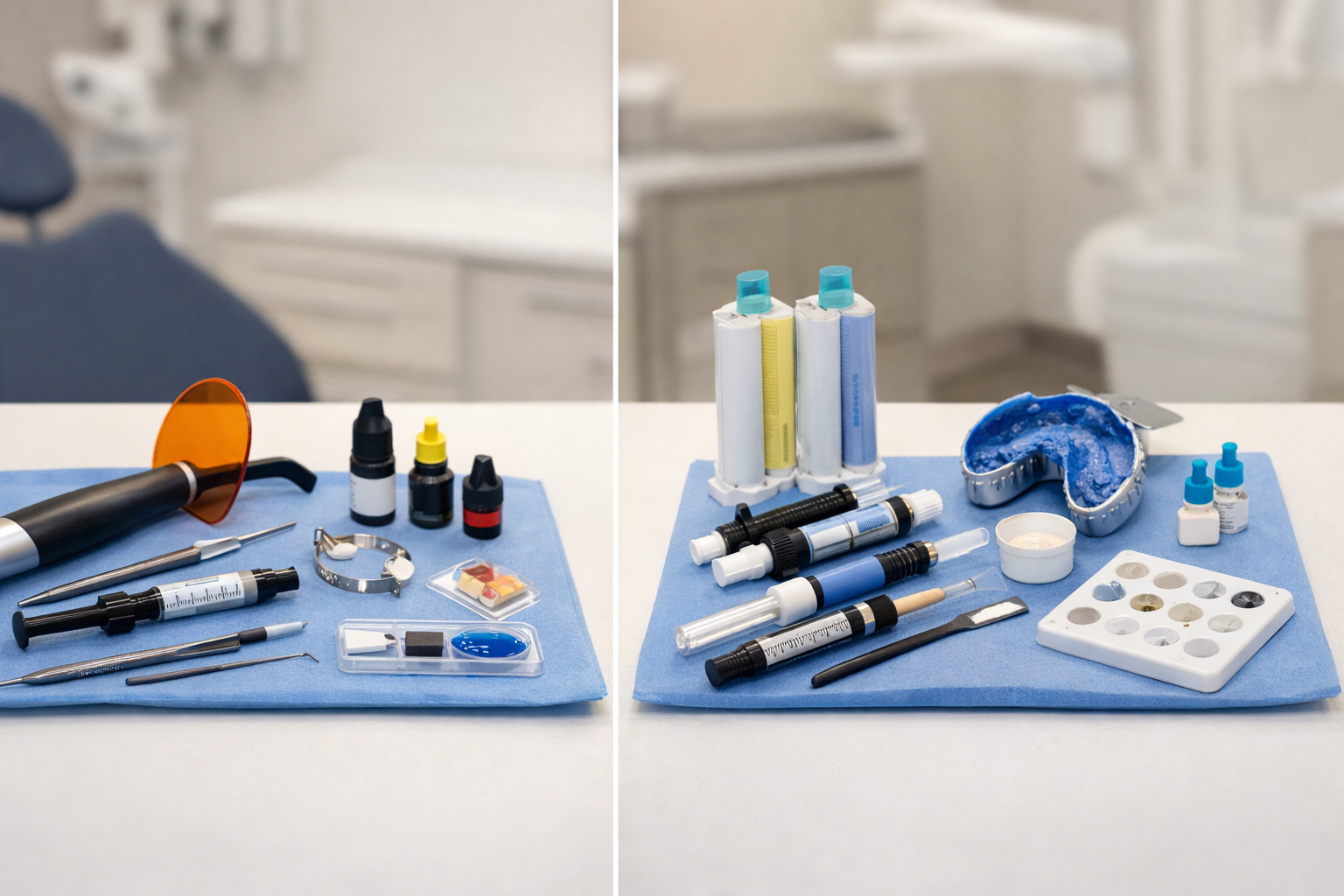
Restorative dentistry is not just about “filling teeth.” It is about preserving function, restoring structure, and maintaining long-term oral health.
For dental nurses, understanding the difference between direct and indirect restorations is fundamental. It influences tray setup, material preparation, moisture control, patient communication, and clinical workflow.
If you do not clearly understand this distinction, restorative procedures will always feel reactive rather than controlled.
What Are Direct Restorations?
A direct restoration is placed and completed entirely within the patient’s mouth during a single appointment.
The material is inserted directly into the prepared cavity and shaped chairside.
Common Examples
Composite restorations
Amalgam restorations
Glass ionomer cement (GIC) restorations
Temporary restorations
Key Characteristics
Completed in one visit
No laboratory stage
Material sets intraorally
Technique-sensitive (especially composite)
Clinical Workflow
Typical stages include:
Local anaesthesia (if required – principles covered in our Pain & Anxiety Control Study Guide)
Cavity preparation
Moisture control
Matrix placement (if needed)
Material placement
Shaping and curing (if applicable)
Finishing and polishing
Occlusion check
Dental Nurse Role in Direct Restorations
A dental nurse must:
Prepare correct restorative materials
Select appropriate matrix system
Maintain a dry field (high-volume suction, cotton rolls, or rubber dam)
Monitor curing light safety
Assist with occlusal checks
Provide post-operative advice
Direct restorations require strong four-handed dentistry coordination. Efficiency here reduces contamination risk and improves marginal integrity.
What Are Indirect Restorations?
An indirect restoration is fabricated outside the mouth usually in a dental laboratory and later cemented into place.
These restorations require at least two stages.
Common Examples
Crowns
Bridges
Inlays
Onlays
Veneers
Dentures
Key Characteristics
Laboratory involvement
Multiple appointments
Impression or digital scan required
Provisional restoration often placed
Cementation stage required
Clinical Workflow (Example: Crown)
Local anaesthesia
Tooth preparation
Gingival retraction (if required)
Impression or digital scan
Shade selection
Temporary crown placement
Laboratory fabrication
Review and cementation appointment
Dental Nurse Role in Indirect Restorations
The nurse must:
Prepare crown preparation trays
Mix impression materials (if conventional technique used)
Assist with gingival retraction
Fabricate or assist with provisional crowns
Prepare cementation materials
Ensure accurate documentation
Indirect procedures require anticipation. The nurse must think one appointment ahead.
Radiographs taken during restorative treatment must follow the principles outlined in the Radiography Study Guide.
Direct vs Indirect Restorations: Core Differences
| Feature | Direct Restoration | Indirect Restoration |
|---|---|---|
| Fabrication | Inside the mouth | Outside the mouth (lab) |
| Appointments | Usually one | Two or more |
| Material Setting | Intraoral | Extraoral fabrication |
| Laboratory Involvement | No | Yes |
| Temporary Stage | Rare | Common |
| Cementation Phase | No (placed directly) | Yes |
Understanding this comparison simplifies restorative workflow planning.
Material Considerations
Direct Materials
Composite (aesthetic, technique-sensitive)
Amalgam (durable, declining use)
GIC (fluoride release, cervical lesions)
Indirect Materials
Porcelain
Zirconia
PFM (porcelain fused to metal)
Gold alloys
Cobalt chrome (dentures)
Material choice influences:
Preparation design
Moisture control requirements
Cement selection
Longevity
Clinical Risks & Complications
Dental nurses should recognise potential issues early.
Direct Restorations
Post-operative sensitivity
Marginal leakage
Polymerisation shrinkage (composite)
Occlusal discrepancies
Indirect Restorations
Poor marginal fit
Cement failure
Sensitivity after crown preparation
Temporary crown dislodgement
Understanding these complications improves patient reassurance and record accuracy.
Regulatory and Documentation Considerations
Restorative procedures must include:
Valid consent
Accurate charting
Clear material documentation
IR(ME)R compliance where radiographs are taken
Clear post-operative instructions
Final Clinical Perspective
Direct restorations prioritise conservation and immediacy.
Indirect restorations prioritise strength, durability, and structural replacement.
As a dental nurse, competence is measured not just by speed but by understanding the biological, material, and procedural reasoning behind each approach.
When you understand the difference clearly, restorative sessions become structured rather than stressful.
Discover more from Dental Nurse Hub - Resources, Training & Tools
Subscribe to get the latest posts sent to your email.